Session Teaching Card
04
Frame the Opportunity
What opportunity is worth pursuing?
Objective
Define the audience, need, context, and desired change.
Method
Problem framing and success criteria
Evidence
Opportunity brief
Setup Notes
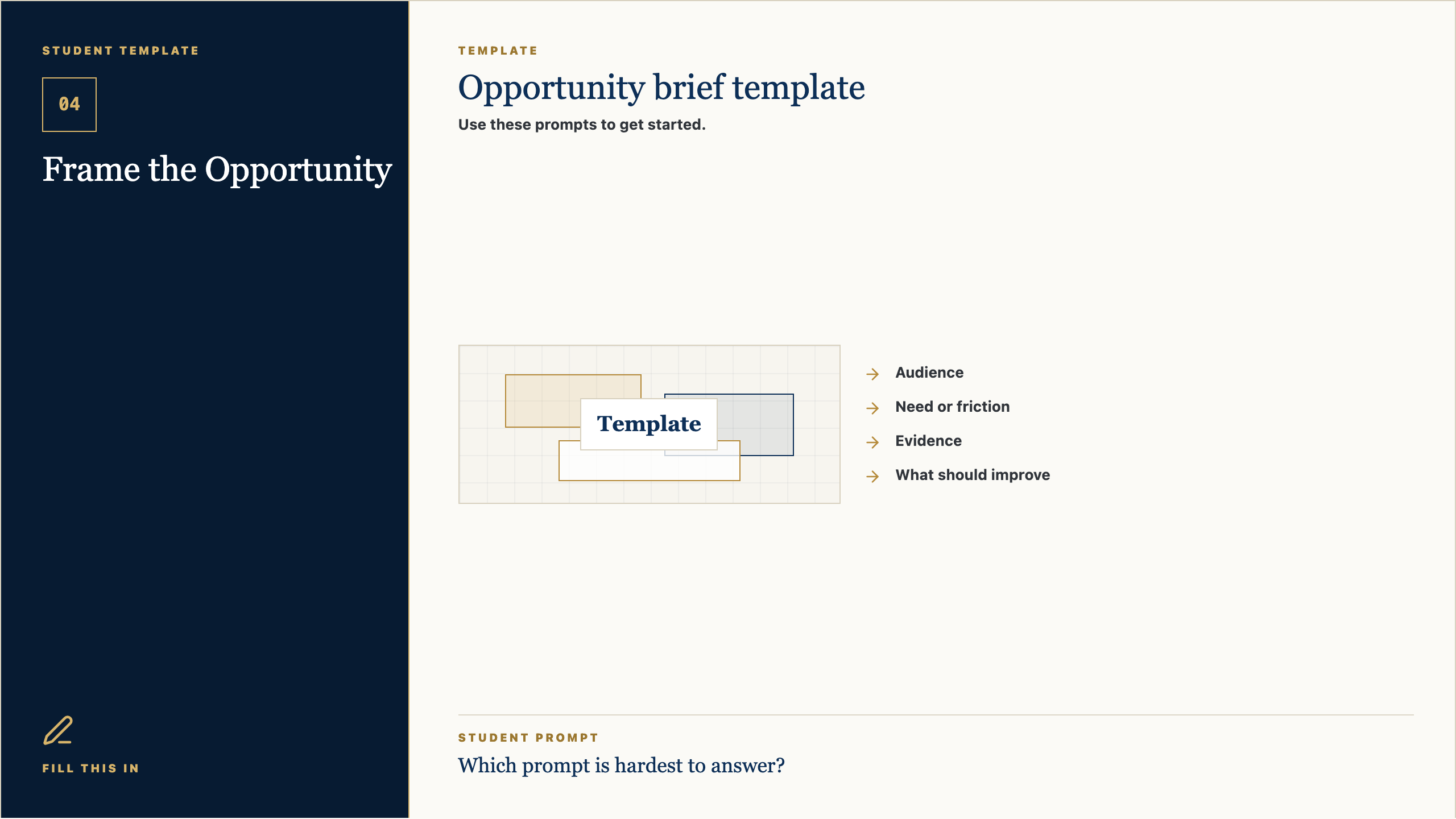
- Prepare an opportunity brief template with audience, need, context, constraints, and success measure.
- Bring one weak and one strong problem frame for comparison.
- Have students bring observation and interview evidence from prior sessions.
Key Teaching Points
- A strong opportunity names a specific audience and meaningful change.
- Constraints make the project clearer and more realistic.
- Success criteria help students judge ideas later.
Activity Guidance
- 1Analyze the model frames and name why one is stronger.
- 2Students draft briefs, then trade with peers for specificity feedback.
- 3End with each student revising one sentence to be more concrete.
Discussion Prompts
- Who exactly is this for?
- What should become easier, clearer, safer, more accessible, or more meaningful?
- What evidence supports this opportunity?
Reflection
Who is this for, and what should improve?
Teacher Watch
Avoid broad audiences like everyone or students. Ask for a narrower first audience.
Support
Use a fill-in frame: For [audience], [situation] is hard because [evidence].
Extension
Have students add ethical risks or access constraints to the brief.